Baker’s Croissants Recipe
Introduction
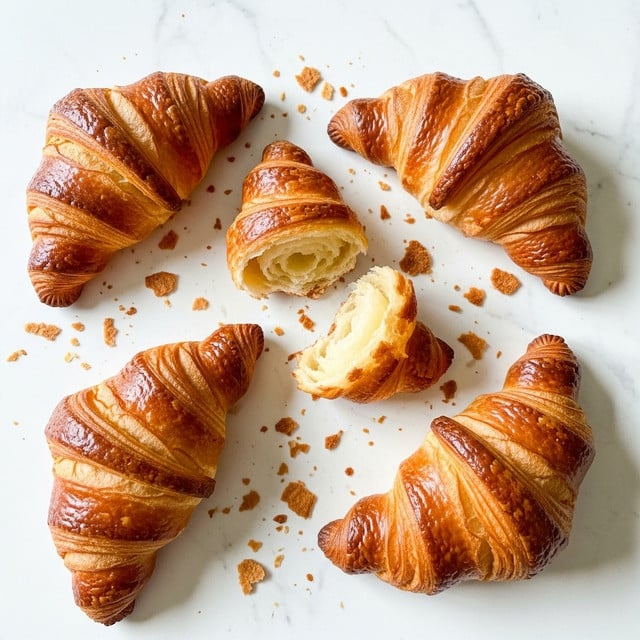
Making classic baker’s croissants at home is a rewarding experience that fills your kitchen with irresistible aromas. This recipe guides you through creating flaky, buttery layers that rival your favorite bakery. With patience and technique, you’ll enjoy delicious croissants fresh from your own oven.
Ingredients
- 2 large eggs plus enough warm water to make 2 cups (454g) of liquid
- 1/4 cup (50g) granulated sugar, divided
- 5 1/2 to 6 cups (660g to 720g) King Arthur Unbleached All-Purpose Flour
- 2 1/4 teaspoons instant yeast
- 2 tablespoons (28g) butter, melted
- 1/2 cup (56g) King Arthur Baker’s Special Dry Milk or nonfat dry milk, optional
- 1 scant tablespoon (16g) table salt
- 1 teaspoon King Arthur Pure Vanilla Extract, optional for sweet pastry
- 30 tablespoons (425g) unsalted butter, cool to the touch
- 3/4 teaspoon table salt
- 1/2 cup (60g) King Arthur Unbleached All-Purpose Flour
Instructions
- Step 1: To make the dough, combine the eggs and warm water in a large mixing bowl. Add 1 tablespoon of sugar, 3 cups (362g) of flour, and the yeast. Mix until well blended and set aside to let the sponge develop.
- Step 2: For the butter block, cut the butter into 1-inch chunks. Using a stand mixer with the paddle attachment, combine the butter with the 3/4 teaspoon salt and 1/2 cup (60g) flour on low speed until smooth and lump-free. Avoid overmixing to prevent incorporating air.
- Step 3: Spread the butter mixture onto plastic wrap, shaping it into an 8-inch square. Wrap tightly and refrigerate for 30 minutes.
- Step 4: Finish the dough by adding the melted butter to the sponge. Whisk together the remaining sugar, 2 1/2 cups (298g) flour, dry milk (if using), salt, and vanilla extract (if using), then add to the sponge. Mix to form a dough. Knead for 5 minutes, then test the dough’s tackiness; add remaining flour 2 tablespoons at a time if too sticky. Once smooth and elastic, pat the dough into a 9-inch square, wrap, and refrigerate for 30 minutes.
- Step 5: Remove chilled dough and gently roll it into a 12-inch square.
- Step 6: Unwrap the butter block and place it diagonally in the center of the dough (like a diamond in a square). Fold the dough corners over the butter to enclose it completely. Moisten edges with water and pinch seams to seal. Dust top with flour and turn the package over.
- Step 7: Using a rolling pin, tap the dough all over to help it flatten into a rectangle. Roll to a 20-by-10-inch rectangle, dusting with flour as needed to prevent sticking.
- Step 8: Brush off excess flour with a dry brush and fold the dough into thirds like a business letter. Keep edges aligned and secure with a bit of water if needed. This completes the first turn.
- Step 9: Rotate the dough 90 degrees so it looks like a closed book. Roll out again to 20-by-10 inches and fold into thirds. This is the second turn. Wrap and refrigerate for 30 minutes to rest the gluten.
- Step 10: Perform two more turns following the same rolling and folding process. Wrap the dough and refrigerate for at least 1 hour or overnight. You may freeze the dough at this stage if desired.
- Step 11: To shape the croissants, cut the dough packet in half. Refrigerate or freeze one half.
- Step 12: Roll the other half into a 13-by-18-inch rectangle. Trim about 1/4 inch from the edges using a ruler and pizza cutter to remove folded seams that could inhibit rising.
- Step 13: Cut the dough lengthwise into thirds and then in half down the center to create six 4-by-9-inch rectangles. Cut each rectangle diagonally into two triangles. Arrange triangles with points facing away from you, gently stretch them a little longer, and cut a 1-inch notch in the center base of each.
- Step 14: Roll each triangle starting from the base notch, folding inward to create a curved crescent shape. Ensure the tip is tucked under the bottom to seal it. Place shaped croissants on a parchment-lined baking sheet, curving ends toward each other. Refrigerate for 30 minutes.
- Step 15: Remove croissants from the refrigerator and allow them to warm and rise at room temperature for 60 to 90 minutes until noticeably expanded and springy to the touch.
- Step 16: Preheat the oven to 425°F (220°C). Brush croissants with an egg wash made from one beaten egg mixed with 1 tablespoon water. Bake for 15 minutes, then reduce the oven temperature to 350°F (175°C) and bake for an additional 10 to 15 minutes until deep golden brown and fully cooked. Let cool on the baking sheet on a rack for 20 minutes before serving.
Tips & Variations
- Use cold butter and chill the dough adequately to get distinct, flaky layers.
- For a sweeter croissant, add the optional vanilla extract to the dough.
- Ensure the butter block is pliable but cool to prevent it from melting into the dough prematurely.
- Allow the croissants to rise fully at room temperature for the best volume and texture.
Storage
Store baked croissants in an airtight container at room temperature for up to 2 days. To refresh, warm them briefly in a 350°F oven for 5 to 7 minutes. Unbaked shaped croissants can be refrigerated for up to 24 hours or frozen for up to 1 month; bake directly from frozen with an extra 10 minutes added to baking time.
How to Serve
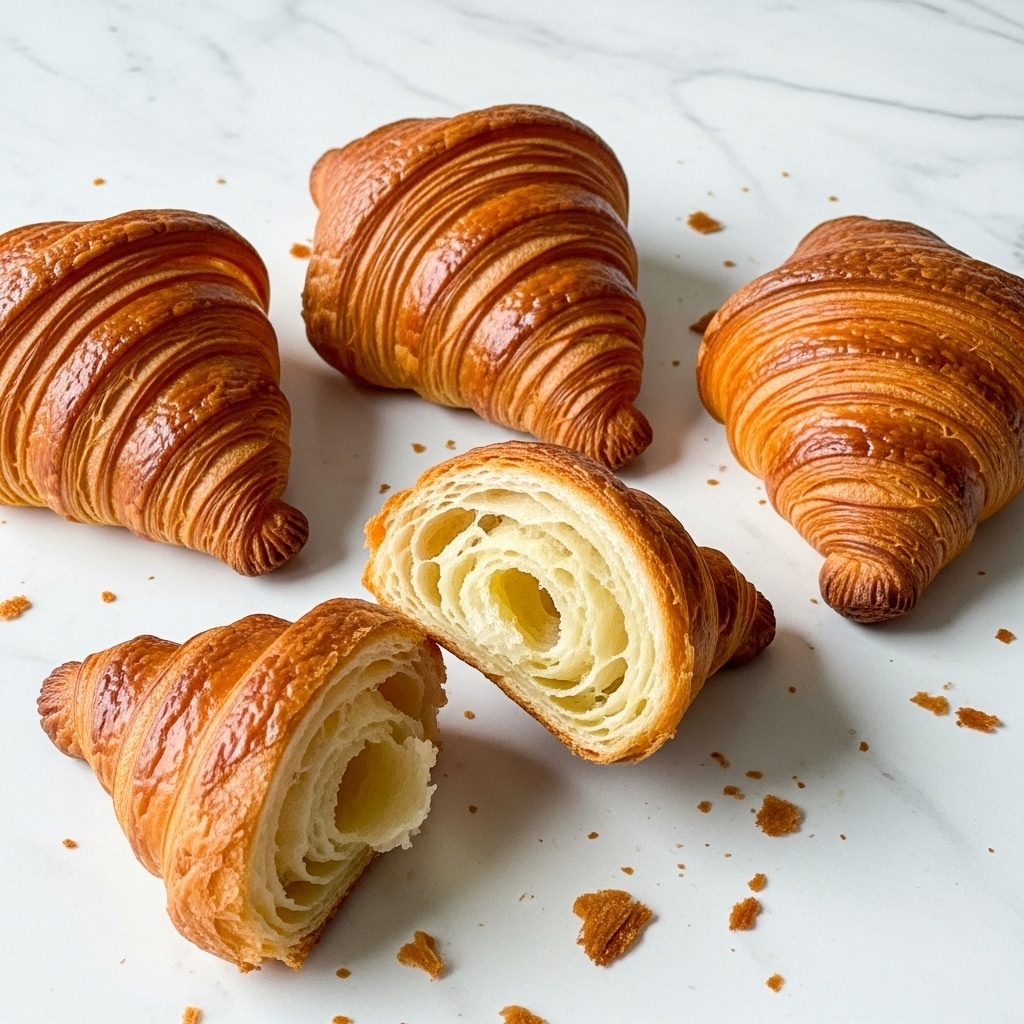
Serve this delicious recipe with your favorite sides.
FAQs
Can I use regular all-purpose flour instead of King Arthur flour?
Yes, regular all-purpose flour will work, though the texture might be slightly different. King Arthur flour’s higher protein content helps create a stronger dough and better rise.
What if my dough is sticky and hard to handle?
Add flour gradually, 2 tablespoons at a time, while kneading until the dough is smooth and elastic but not dry. Proper hydration is key for tender croissants, so add flour sparingly.
Print
Baker’s Croissants Recipe
- Total Time: 3 hours 45 minutes to overnight (including resting and refrigeration times)
- Yield: 12 large croissants 1x
Description
This classic Baker’s Croissants recipe guides you through making flaky, buttery croissants from scratch using a detailed lamination technique. The dough is enriched with eggs, sugar, milk powder, and a generous butter block, folded multiple times to create layers that bake into golden, tender pastries perfect for breakfast or an indulgent snack.
Ingredients
Dough Ingredients
- 2 large eggs plus enough warm water to make 2 cups (454g) of liquid
- 1/4 cup (50g) granulated sugar, divided
- 5 1/2 to 6 cups (660g to 720g) King Arthur Unbleached All-Purpose Flour
- 2 1/4 teaspoons instant yeast
- 2 tablespoons (28g) butter, melted
- 1/2 cup (56g) King Arthur Baker’s Special Dry Milk or nonfat dry milk (optional)
- 1 scant tablespoon (16g) table salt
- 1 teaspoon King Arthur Pure Vanilla Extract (optional; for sweet pastry)
Butter Block Ingredients
- 30 tablespoons (425g) unsalted butter, cool to the touch
- 3/4 teaspoon table salt
- 1/2 cup (60g) King Arthur Unbleached All-Purpose Flour
Instructions
- Make the sponge: Combine the eggs and warm water in a large mixing bowl. Add 1 tablespoon of sugar, 3 cups (362g) of flour, and instant yeast and mix until blended. Set aside so the sponge can activate and bubble.
- Prepare the butter block: Cut the unsalted butter into 1-inch chunks. Combine with salt and flour in a stand mixer with the paddle attachment and mix on low speed just until smooth with no lumps, being careful not to incorporate air. Spread on plastic wrap in an 8˝ square, wrap, and refrigerate for 30 minutes.
- Finish the dough: Add the melted butter to the sponge. Whisk remaining sugar, 2 1/2 cups (298g) flour, dry milk (if using), and salt together and add to the sponge. Mix until dough forms and knead for 5 minutes. Add remaining flour if sticky, 2 tablespoons at a time, until smooth and elastic. Pat into a 9˝ square, wrap, and refrigerate for 30 minutes.
- Lamination – First roll: Roll chilled dough to a 12″ square. Place butter block at a 45° angle in the center making a diamond shape. Fold dough corners over butter, moisten edges, and pinch seams tightly to enclose. Dust with flour, turn over, and gently tap dough with rolling pin to form a rectangular shape. Roll out to 20″ x 10″ rectangle, dusting with flour as needed.
- First fold (Turn 1): Brush off excess flour with a dry brush and fold dough in thirds like a business letter, aligning edges carefully. Use a little water to tack corners if dough slides.
- Second fold (Turn 2): Rotate dough like a book and roll out again to 20″ x 10″. Fold in thirds again. Wrap dough and refrigerate 30 minutes to relax gluten.
- Third and fourth folds (Turns 3 and 4): Repeat rolling and folding two more times. Wrap dough and refrigerate for at least 1 hour or overnight. Dough can be frozen at this point.
- Shape the croissants: Cut dough in half. Wrap and refrigerate or freeze one half. Roll remaining half to 13″ x 18″ rectangle. Trim about 1/4″ off all edges with ruler and pizza cutter to remove folded edges.
- Cutting the dough: Cut dough into thirds lengthwise and halves crosswise to form six 4″ x 9″ rectangles. Cut each rectangle diagonally in half to make triangular shapes. Arrange triangles with points facing away, stretch slightly, and cut a 1″ notch in the center base of each triangle.
- Roll croissants: Roll each croissant from the base notch inward toward the tip, curling to shape a crescent with the tip tucked underneath. Place shaped croissants on parchment-lined sheet with ends curved inward. Refrigerate 30 minutes.
- Proof: Let croissants rise at room temperature for 60 to 90 minutes until noticeably expanded and springy to the touch.
- Bake: Preheat oven to 425°F. Brush each croissant with egg wash (egg beaten with 1 tablespoon water). Bake 15 minutes, then reduce oven temperature to 350°F and bake another 10-15 minutes until deep golden brown and fully cooked through. Cool on pan on a rack for 20 minutes before serving.
Notes
- Butter temperature is critical; it should be cool but pliable — not too soft or warm or it will seep through the dough layers.
- The lamination process creates the classic flaky layers; keep dough and butter cold during rolling.
- Resting and refrigeration between folds relaxes gluten and prevents tearing.
- If you want sweeter croissants, add the vanilla extract during dough mixing.
- Croissants can be frozen after folding or shaped and proofed, then baked directly from frozen with extra baking time.
- Allow the croissants to cool before slicing to preserve flaky structure.
- Prep Time: 1 hour 30 minutes
- Cook Time: 25 to 30 minutes
- Category: Breakfast Pastry
- Method: Baking
- Cuisine: French
Keywords: croissants, laminated dough, breakfast pastry, butter croissants, homemade pastry, French bakery