No Knead Rosemary Dutch Oven Bread Recipe
Introduction
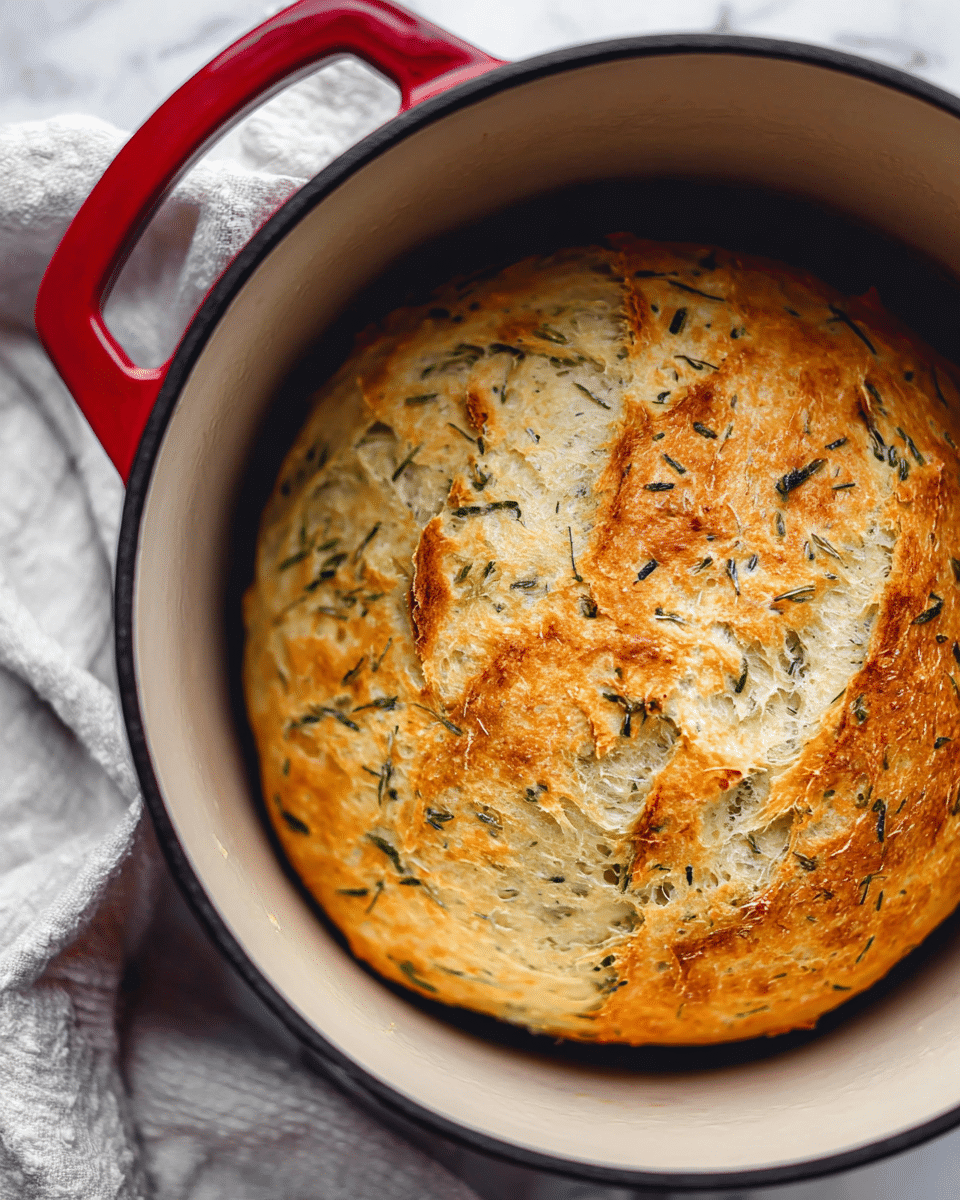
This No Knead Dutch Oven Bread is a simple and flavorful homemade loaf infused with fresh rosemary. With minimal effort and just a little patience, you’ll enjoy a crusty, golden bread perfect for dipping, sandwiches, or enjoying on its own.
Ingredients
- 3 cups all-purpose flour (360g)
- 1¾ tsp sea salt (9g)
- ¾ cup fresh rosemary leaves (22g, chopped, or 2-4 tbsp dried)
- ½ tsp active dry yeast (2g)
- 1½ cups water (341g, room temperature)
Instructions
- Step 1: In a large bowl, mix the flour, sea salt, rosemary, and yeast together until evenly combined.
- Step 2: Add the water and use a spatula to blend everything into a sticky dough, ensuring all dry ingredients are incorporated.
- Step 3: Cover the bowl with plastic wrap or a clean, damp dish towel and let it rest on the counter for at least 12 hours or overnight.
- Step 4: Preheat your oven to 450°F, placing a Dutch oven with its lid inside to heat up along with it.
- Step 5: When preheated, carefully use oven mitts to remove the Dutch oven, then take off the lid.
- Step 6: Lightly flour a clean work surface and your hands. Remove the dough from the bowl and gently shape it into a ball, folding it a few times if needed.
- Step 7: Place the dough ball into the hot Dutch oven. Be cautious not to touch the hot cast iron.
- Step 8: Cover with the lid and bake for 30 minutes. Then remove the lid and bake an additional 15-20 minutes until the bread is golden brown and crusty.
- Step 9: Check doneness by tapping the bottom of the loaf; it should sound hollow. The internal temperature should be between 195-210°F for fully baked bread.
- Step 10: Remove the bread from the oven and let it cool before slicing and serving.
Tips & Variations
- For a different flavor, substitute rosemary with thyme, oregano, or a mix of dried herbs.
- You can use dried rosemary if fresh is unavailable—reduce to 2-4 tablespoons as dried herbs are more concentrated.
- Add a tablespoon of olive oil to the dough for a richer texture.
- Use bread flour instead of all-purpose for a chewier crumb and higher rise.
- Make sure your water is at room temperature to activate the yeast properly without killing it.
Storage
Store leftover bread wrapped in a clean kitchen towel or paper bag at room temperature for up to 2 days to maintain crustiness. For longer storage, freeze the bread in an airtight bag for up to 3 months. To reheat, thaw at room temperature and warm in a preheated oven at 350°F for 10 minutes to refresh the crust.
How to Serve
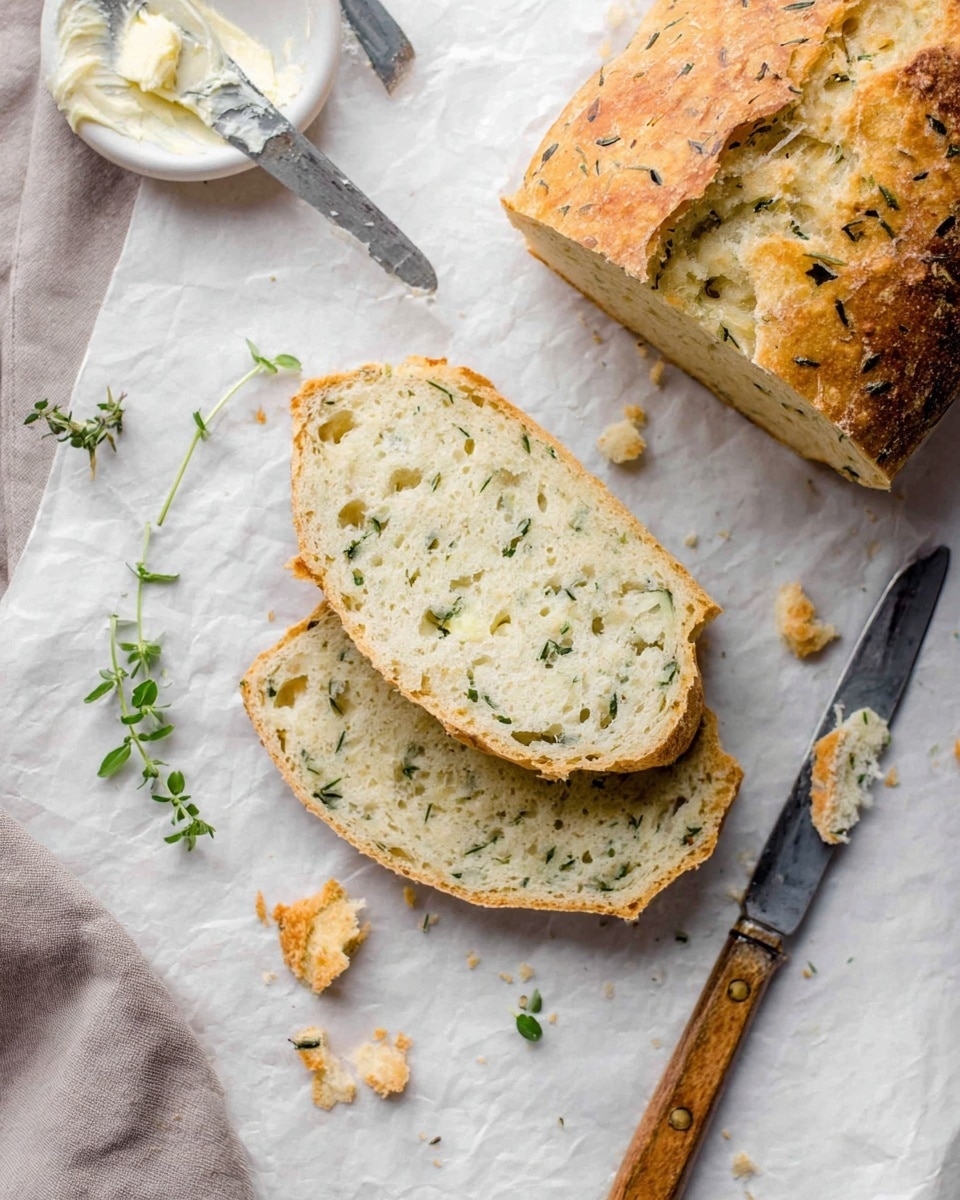
Serve this delicious recipe with your favorite sides.
FAQs
Can I use instant yeast instead of active dry yeast?
Yes, you can use instant yeast. Since it doesn’t need to be dissolved first, just mix it directly with the dry ingredients and reduce the rising time slightly if needed.
Do I really need a Dutch oven to make this bread?
Using a Dutch oven helps create steam during baking, which forms a crisp crust and good oven spring. If you don’t have one, try using a heavy oven-safe pot with a lid or place a pan of water in the oven to generate steam.
Print
No Knead Rosemary Dutch Oven Bread Recipe
- Total Time: 12 hours 65 minutes
- Yield: 1 loaf (about 1.5 pounds) 1x
- Diet: Vegetarian
Description
This No Knead Dutch Oven Bread recipe offers a simple and rustic way to bake a flavorful, crusty bread infused with fresh rosemary. Utilizing a slow fermentation process and baking in a preheated Dutch oven, the bread develops a beautifully crisp crust and tender crumb without any kneading required.
Ingredients
Dry Ingredients
- 3 cups all-purpose flour (360g)
- 1¾ tsp sea salt (9g)
- ¾ cup fresh rosemary leaves, chopped (22g) or 2-4 tbsp dried rosemary
- ½ tsp active dry yeast (2g)
Wet Ingredient
- 1½ cups water (341g), room temperature
Instructions
- Mix: In a large bowl, combine the flour, sea salt, chopped rosemary, and active dry yeast. Add the room temperature water and use a spatula to thoroughly blend until the mixture forms a wet, sticky dough.
- Rest: Cover the bowl tightly with plastic wrap or a damp clean dish towel and leave it on your kitchen counter to ferment overnight for at least 12 hours. This long, slow rise helps develop flavor and gluten without kneading.
- Preheat Dutch Oven: About 30 minutes before baking, place your Dutch oven with its lid inside your oven and preheat to 450°F (230°C). This ensures the cast iron is hot for creating a crispy crust.
- Remove Dutch Oven: Using oven mitts, carefully take the preheated Dutch oven from the oven and set it on a heat-safe surface. Remove the lid, but be cautious as it will be very hot.
- Shape Dough: Lightly flour a clean surface and your hands. Gently remove the risen dough from the bowl and fold it a couple of times to form a rough ball. Place the dough ball into the bottom of the hot Dutch oven.
- Bake Covered: Cover the Dutch oven with its lid and bake for 30 minutes. The lid traps steam to help develop a perfect crust during this initial phase.
- Bake Uncovered: Remove the lid and continue baking the bread for another 15-20 minutes until the crust turns golden brown and crispy on top.
- Check Doneness: The loaf should be deeply browned with a crisp crust. Tap the bottom of the bread gently; it should sound hollow. The internal temperature ideally falls between 195°F and 210°F (90-99°C).
- Cool and Serve: Carefully remove the bread from the Dutch oven and place it on a wire rack to cool before slicing and serving. Cooling helps complete the baking process and avoids a gummy crumb.
Notes
- This recipe requires an overnight rest period of at least 12 hours for optimal flavor development.
- You may substitute dried rosemary for fresh, using 2-4 tablespoons, depending on your taste preference.
- Ensure your Dutch oven is oven-safe and preheated to achieve a crispy crust.
- Use oven mitts when handling the hot Dutch oven as it retains heat very well.
- Internal temperature check is the best way to ensure the bread is fully baked.
- Allow bread to cool completely before slicing to prevent a gummy texture.
- Prep Time: 15 minutes
- Cook Time: 50 minutes
- Category: Bread
- Method: Baking
- Cuisine: American
Keywords: no knead bread, Dutch oven bread, rosemary bread, easy bread recipe, artisan bread, overnight bread dough