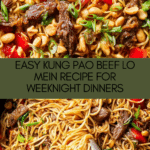
Kung Pao Beef Lo Mein Recipe
Introduction
This Kung Pao Beef Lo Mein is a flavorful twist on a classic Chinese dish, combining tender marinated flank steak with spicy chiles, crunchy peanuts, and savory noodles. It’s perfect for a satisfying weeknight meal that brings bold, authentic flavors to your table.
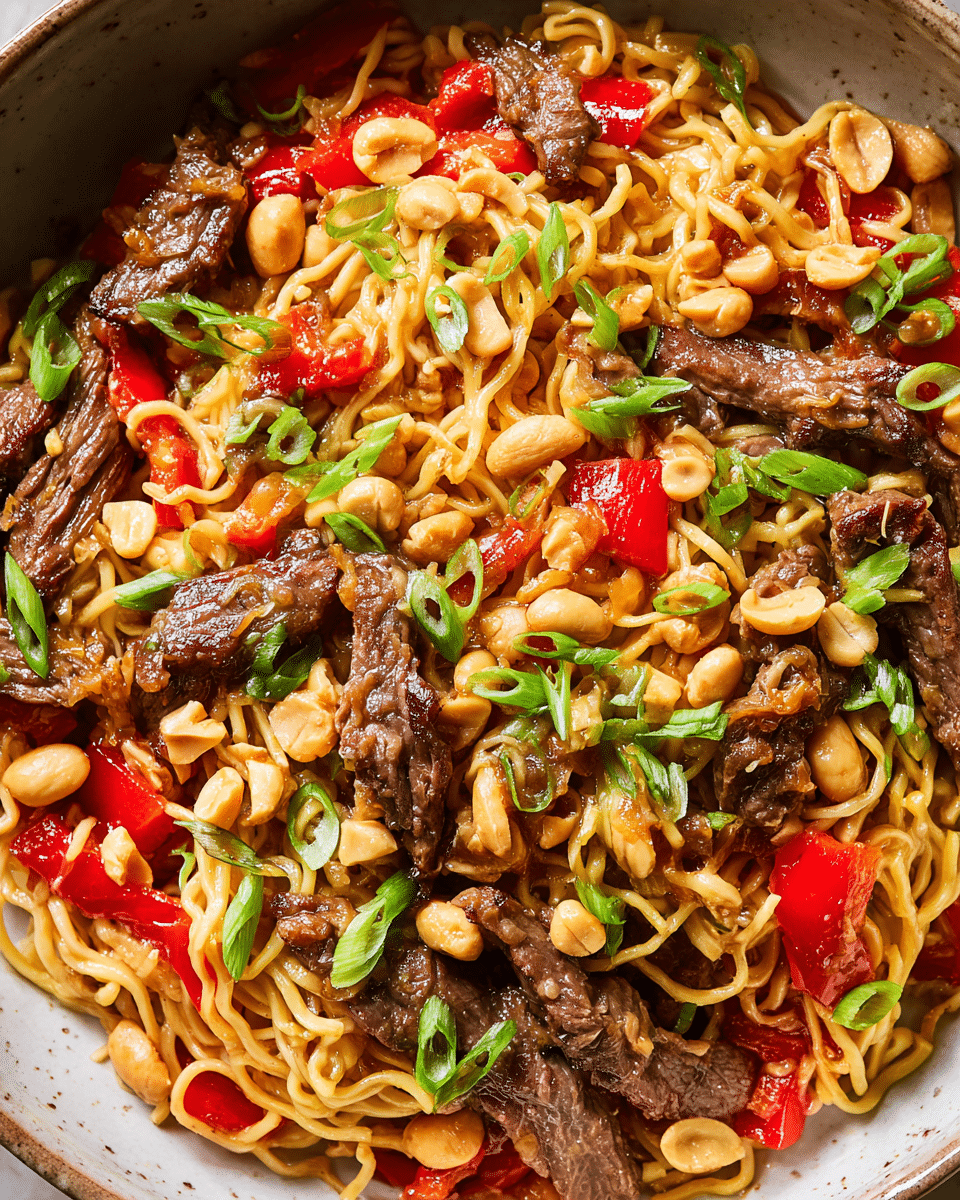
Ingredients
- 1 large egg white
- 1 lb. flank steak, thinly sliced against the grain
- 4 tbsp. reduced-sodium soy sauce, divided
- 4 tsp. cornstarch, divided
- 4 tsp. Shaoxing wine, dry sherry, or mirin, divided
- 1 (10-oz.) pkg. lo mein noodles
- 3 tbsp. plus 1 1/2 tsp. Chinese black vinegar or rice wine vinegar
- 3 tbsp. granulated sugar
- 1 tsp. kosher salt
- 1/2 tsp. MSG (optional)
- 4 tbsp. vegetable oil, divided
- 6 dried chiles (such as Sichuan er jing tiao or chiles de árbol), seeds removed, cut into 1/4″ pieces
- 1 cup roasted, unsalted peanuts
- 1/2 tsp. Sichuan peppercorns or freshly ground black pepper
- 1 red bell pepper, seeds and ribs removed, finely chopped
- 1 (1″) piece fresh ginger, peeled, grated (about 1 tbsp.)
- 5 garlic cloves, grated
- 4 scallions, white and pale green parts cut into 1″ pieces, dark green parts thinly sliced
Instructions
- Step 1: In a medium bowl, mix the egg white, flank steak, 1 tablespoon soy sauce, 2 teaspoons cornstarch, and 1 teaspoon Shaoxing wine (or dry sherry or mirin). Cover and let sit at room temperature for at least 20 minutes and up to 1 hour to marinate.
- Step 2: Cook the lo mein noodles according to package directions. Drain and set aside.
- Step 3: In a small bowl, whisk together 3 tablespoons plus 1 1/2 teaspoons vinegar, sugar, salt, MSG (if using), remaining 3 tablespoons soy sauce, remaining 3 teaspoons Shaoxing wine, and remaining 2 teaspoons cornstarch to make the sauce.
- Step 4: Heat 3 tablespoons vegetable oil in a large wok or cast-iron skillet over medium-high heat. Arrange half the beef in a single layer and cook, stirring occasionally, until browned and just cooked through, about 2 to 3 minutes. Transfer to a plate. Repeat with remaining beef and pour any juices over it.
- Step 5: Reduce heat to medium-low and add the remaining 1 tablespoon oil to the wok. Add the dried chiles, peanuts, and peppercorns. Cook, stirring often, until chiles slightly darken and peanuts turn golden, about 1 minute.
- Step 6: Add the chopped bell pepper, grated ginger, grated garlic, and white and pale green scallion parts. Cook, stirring often, until fragrant and vegetables begin to soften, about 3 to 5 minutes.
- Step 7: Pour in the prepared sauce and bring to a simmer. Cook, stirring, until slightly thickened, about 1 to 2 minutes. Return the beef and any accumulated juices to the wok and toss to combine. Add the reserved lo mein noodles and cook, tossing constantly, until noodles are glossy and coated.
- Step 8: Remove from heat and top with the thinly sliced dark green scallion parts before serving.
Tips & Variations
- For extra depth, toast the Sichuan peppercorns briefly before adding to release their aromatic oils.
- Substitute chicken or tofu for a different protein option while keeping the same flavorful sauce.
- If you prefer less heat, reduce the number of dried chiles or remove all seeds carefully.
- Use fresh lo mein noodles if available for a more authentic texture, or substitute with spaghetti in a pinch.
Storage
Store leftover Kung Pao Beef Lo Mein in an airtight container in the refrigerator for up to 3 days. Reheat gently in a skillet over medium heat or microwave until warmed through, adding a splash of water if needed to loosen the sauce.
How to Serve
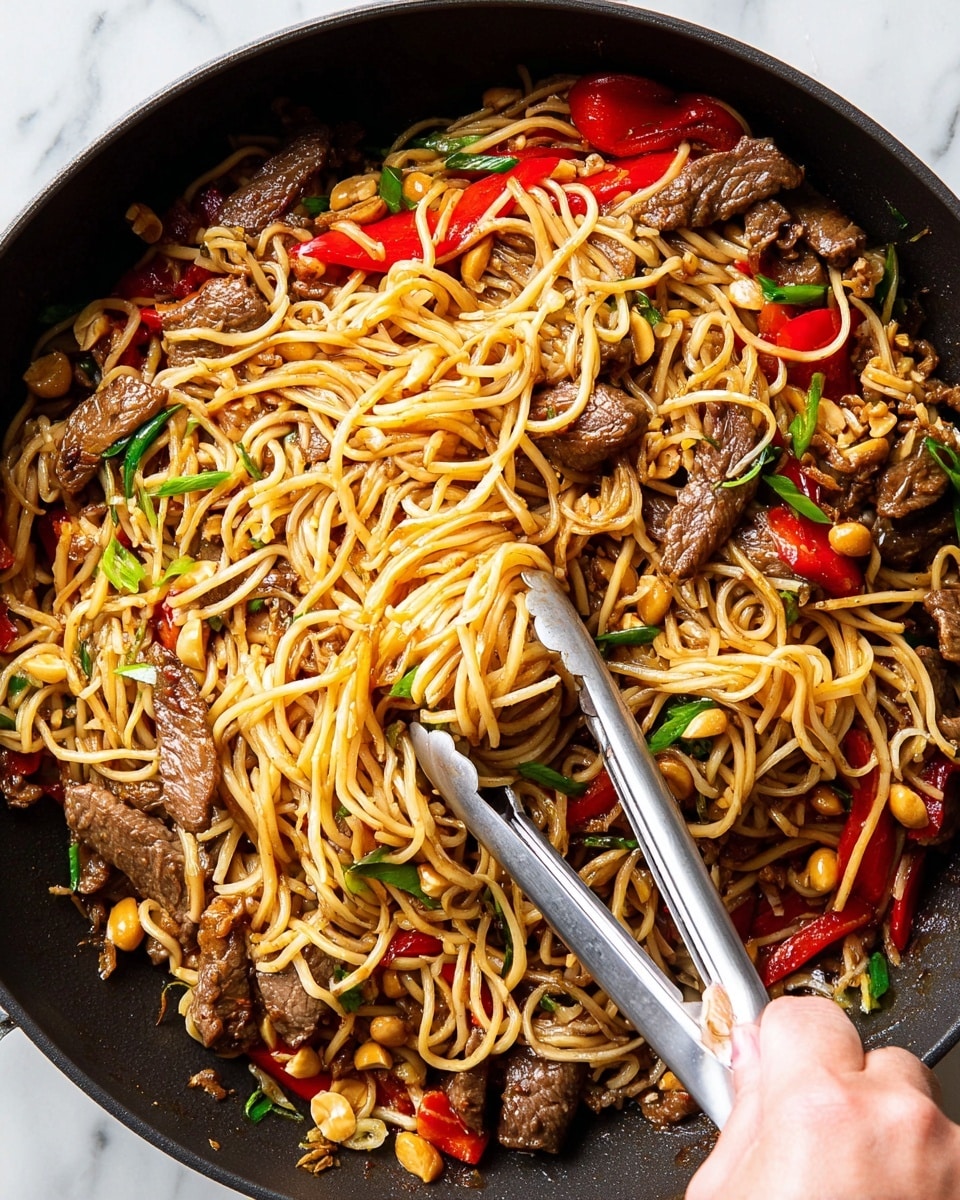
Serve this delicious recipe with your favorite sides.
FAQs
Can I prepare the beef and sauce ahead of time?
Yes, marinate the beef and prepare the sauce up to a day ahead and keep them refrigerated. Cook everything shortly before serving for best texture and flavor.
What can I use if I don’t have Shaoxing wine?
You can substitute dry sherry or mirin, which offer similar flavor profiles. In a pinch, a splash of dry white wine or a teaspoon of rice vinegar can work as alternatives.
Print
Kung Pao Beef Lo Mein Recipe
- Total Time: 30 minutes
- Yield: 4 servings 1x
Description
This vibrant Kung Pao Beef Lo Mein combines tender marinated flank steak with perfectly cooked lo mein noodles, flavorful Sichuan chiles, and crunchy peanuts. Stir-fried with savory soy sauce, fragrant ginger, garlic, and a tangy black vinegar sauce, this dish delivers a delightful balance of spicy, sweet, and savory notes, perfect for a quick and satisfying weeknight dinner inspired by classic Chinese flavors.
Ingredients
Beef Marinade
- 1 large egg white
- 1 lb. flank steak, thinly sliced against the grain
- 1 Tbsp. reduced-sodium soy sauce
- 2 tsp. cornstarch
- 1 tsp. Shaoxing wine, dry sherry, or mirin
Sauce
- 3 tbsp. Chinese black vinegar or rice wine vinegar
- 3 tbsp. granulated sugar
- 1 tsp. kosher salt
- 1/2 tsp. MSG (optional)
- 3 Tbsp. reduced-sodium soy sauce
- 3 tsp. Shaoxing wine, dry sherry, or mirin
- 2 tsp. cornstarch
Main Ingredients
- 1 (10-oz.) package lo mein noodles
- 4 tbsp. vegetable oil, divided
- 6 dried chiles (such as Sichuan er jing tiao or chiles de árbol), seeds removed, cut into 1/4″ pieces
- 1 cup roasted, unsalted peanuts
- 1/2 tsp. Sichuan peppercorns or freshly ground black pepper
- 1 red bell pepper, seeds and ribs removed, finely chopped
- 1 (1″) piece fresh ginger, peeled, grated (about 1 Tbsp.)
- 5 garlic cloves, grated
- 4 scallions, white and pale green parts cut into 1” pieces, dark green parts thinly sliced
Instructions
- Marinate the Beef: In a medium bowl, combine the egg white, thinly sliced flank steak, 1 tablespoon soy sauce, 2 teaspoons cornstarch, and 1 teaspoon Shaoxing wine. Mix thoroughly, cover, and let the beef marinate at room temperature for at least 20 minutes and up to 1 hour to tenderize and absorb the flavors.
- Cook the Lo Mein Noodles: Prepare the lo mein noodles according to the package instructions. Once cooked, drain well and set aside to keep warm while you prepare the rest of the dish.
- Prepare the Sauce: In a small bowl, whisk together the Chinese black vinegar, granulated sugar, kosher salt, MSG (if using), the remaining 3 tablespoons soy sauce, 3 teaspoons Shaoxing wine, and 2 teaspoons cornstarch until fully combined. This sauce will add a balanced tangy sweetness to the stir-fry.
- Cook the Beef: Heat 3 tablespoons of vegetable oil in a large wok or cast-iron skillet over medium-high heat. Add half of the marinated beef in a single layer and cook, stirring occasionally, for 2 to 3 minutes until browned and just cooked through. Transfer the cooked beef to a plate. Repeat with the remaining beef, cooking in batches to avoid overcrowding. Pour any accumulated juices over the cooked beef and set aside.
- Sauté Aromatics and Peanuts: Lower the heat to medium-low and add the remaining 1 tablespoon of vegetable oil to the wok. Add the dried chiles, roasted peanuts, and Sichuan peppercorns or black pepper. Stir-fry for about 1 minute until the chiles darken slightly and the peanuts become aromatic and golden.
- Add Vegetables and Aromatics: Add the finely chopped red bell pepper, grated ginger, grated garlic, and the white and pale green parts of the scallions to the wok. Stir frequently and cook for 3 to 5 minutes until fragrant and the vegetables begin to soften.
- Add Sauce and Combine: Pour in the prepared sauce and bring to a simmer. Continue cooking, stirring constantly, for 1 to 2 minutes until the sauce thickens slightly. Return the cooked beef along with any juices to the wok and toss everything together to coat evenly.
- Incorporate Noodles and Finish: Add the reserved lo mein noodles to the wok. Toss constantly over the heat until the noodles are glossy and well coated with the sauce, about 2 minutes.
- Serve: Remove the wok from heat. Garnish the dish with the thinly sliced dark green parts of the scallions for a fresh pop of color and flavor. Serve immediately while hot.
Notes
- Using flank steak thinly sliced against the grain ensures tenderness in the beef.
- Removing seeds from dried chiles moderates the heat level; adjust to your preferred spice tolerance.
- MSG is optional but enhances umami; omit if you prefer.
- If Shaoxing wine is unavailable, dry sherry or mirin can be effective substitutes.
- Cooking beef in batches prevents steaming and promotes a better sear.
- To add more vegetables, consider including sliced carrots or snap peas and adjust cooking times accordingly.
- For a gluten-free version, substitute soy sauce with tamari or coconut aminos and ensure the lo mein noodles are gluten-free.
- Prep Time: 15 minutes
- Cook Time: 15 minutes
- Category: Main Course
- Method: Stovetop
- Cuisine: Chinese
Keywords: Kung Pao, Beef Lo Mein, Stir-Fry, Chinese Noodles, Spicy Beef Lo Mein